
I’ve been back from my trip to Hong Kong for a little over a month now. Here are some little differences I’ve noticed between there and here.
Parking
Space is at a premium in Hong Kong, so parking spots are tiny. Most cars have folding side-mirrors, and proximity sensors that beep faster the closer you are to something when backing up. Vans and SUVs have mirrors on the back windows that lets a driver see the back bumper through the rear-view mirror. That way, you can squeeze into a space without any guess work, although it takes about three or four turns, Austin Powers style.
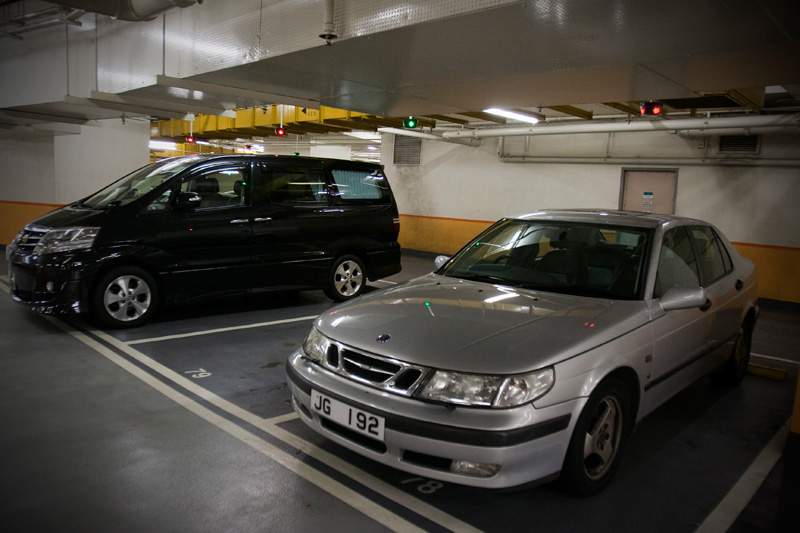
Some parking lots also have these lights above the spots that let people know if a car is parked in the space — green means it’s available. That way, you can see what spots are free with a quick glance, instead of driving around and hunting.
Taking care of the elderly
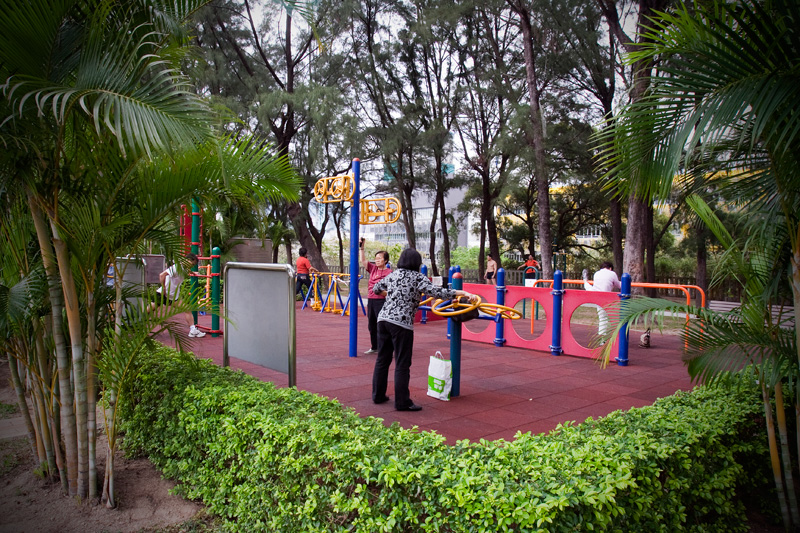
In the parks, there are workout areas for the elderly. They include things like Gazelles, bench steppers, and wheels you can rotate for flexibility. This is so awesome. Canada should have something like this. My grandma used come to this park to work out before she had colon cancer.

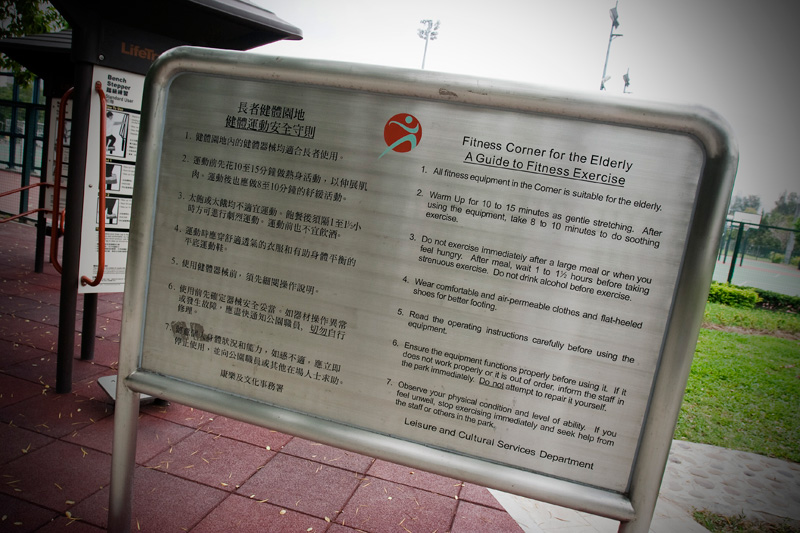
How cool is it that the symbol they use is the silhouette of someone doing single whip. I found this symbol in many parks actually, and I think it means that it’s a public park.
There are also speakers that beep at the traffic lights to let blind people know when to cross, and subway escalators that click constantly, so they know where to get on.
Western commercials
Sometimes the commercials are dubbed over, so there are Caucasian actors in them speaking Chinese. Sometimes, they’re redone completely, such as the Oreo cookie commercial with the two young girls, where the younger one tries to dunk her cookie in her milk, except she has a sip cup. So she ends up pouring the milk onto the cookie and laughing. In Hong Kong this is re-done, pretty much shot-for-shot, except with two Chinese boys.
Also, instead of the slogan “Red Bull gives you wings”, the cartoons use inconsistent variations, such as, “No red bull, how can I fly?” (in Chinese).
Soft water
Plumbing provides soft water, or softer than what I get at home in the city. That means your skin doesn’t dry out, even with even hot showers.
Electrical outlets
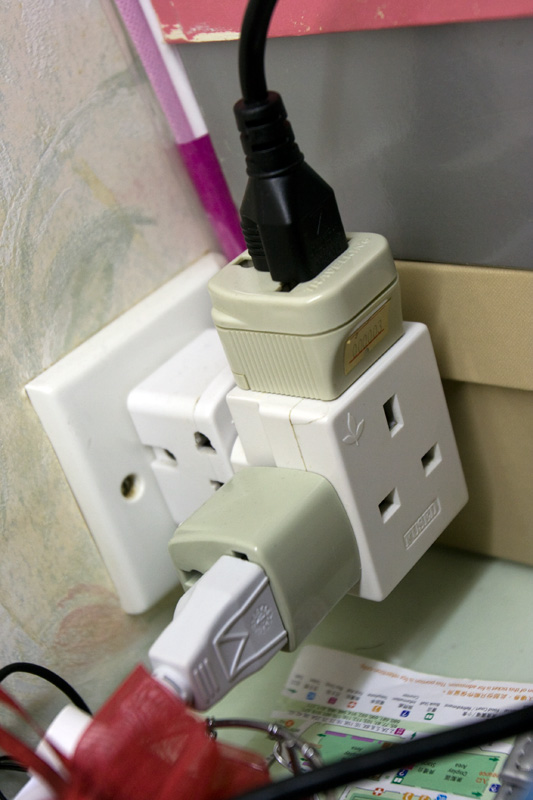
I still don’t understand how the electrical outlets work. There seems to be one type of plug but many different types of adapters, not including the ones for North American plugs. Two prongs, three prongs, square prongs, round prongs, flat prongs, or combinations thereof. This is a picture of the adapters I needed to get my MacBook Pro and external hard drive going.
No central air or hot water
A lot of Hong Kong living is in apartments, so there’s no central air. That means an air conditioning unit in every room, sometimes two if the room is big. The units aren’t always connected to windows, (as you can see in this picture at the top right), which makes me wonder where the hot air goes. Is there a vent behind the A/C unit? Also, since these units are high up, they have fancy remotes with LCD screens that control both on/off and the temperature.

There’s also no central hot water tank. Each shower and sink has it’s own small gas-powered tank, which instantly ignites the gas to heat the water coming in as soon as the hot water is turned on from the faucet. It’s a little scary to be taking a shower in the tub, and seeing a plume of blue flames across from you at all times.
No daylight savings
Hong Kong doesn’t have daylight savings, because the difference in light between the summer and the winter isn’t great enough. This was especially confusing, when I went from Hong Kong being 13 hours ahead before I got there, to 12 hours ahead when I landed, because my flight was on the day that we’re supposed to adjust our clocks in North America.
Lone eaters
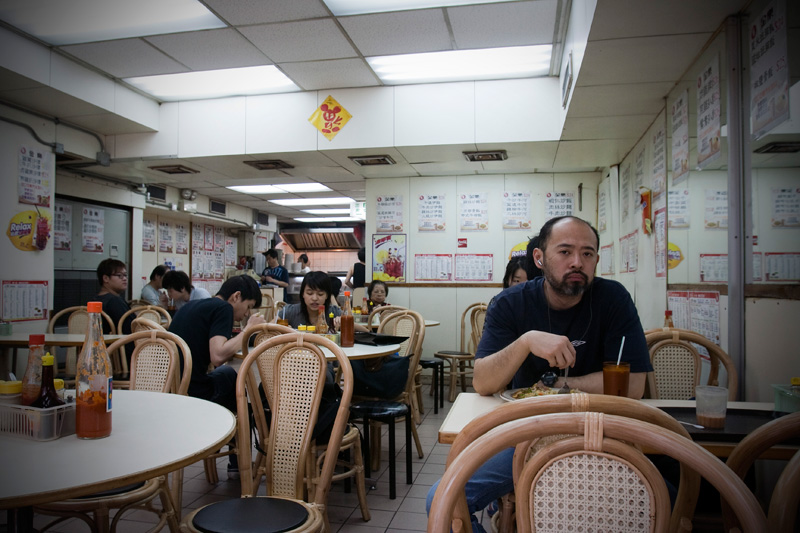
I would see people eating by themselves all the time in Hong Kong, whereas in North America it seems to be a little more taboo, like saying you don’t have any friends or something. This guy was watching a TV in the corner to hear the race results at the Royal Hong Kong Jockey Club, since betting on them is so popular. Actually, pretty much everyone in here was following the race, probably for the same reasons.
Eight-digit telephone numbers
With an extra number, the pacing becomes different when telling someone your number. Most people seem to break it up in 4 and 4. My dad tried to tell me his number, and broke it up into 3, 3, and 2. I couldn’t understand him. It’s like he was speaking a different language.
Boiling drinking water
Everyone has little water canteens in the kitchen, to keep water hot, and a jug for room temperature water. That’s because the water that comes out of the tap can’t be trusted, so any water used for drinking is boiled beforehand. I’ve been told that if you drink hot water out of the faucet without boiling, there will be the taste of other foods in there. This makes the water used to rinse your mouth somewhat scary.
Pizza Hut and McCafé


Pizza Hut’s in Hong Kong are way classier than what we have here. They also serve a wider variety of foods, like the honey lemon tea, and this snack platter, with chocolate drizzled peaches and strawberries.
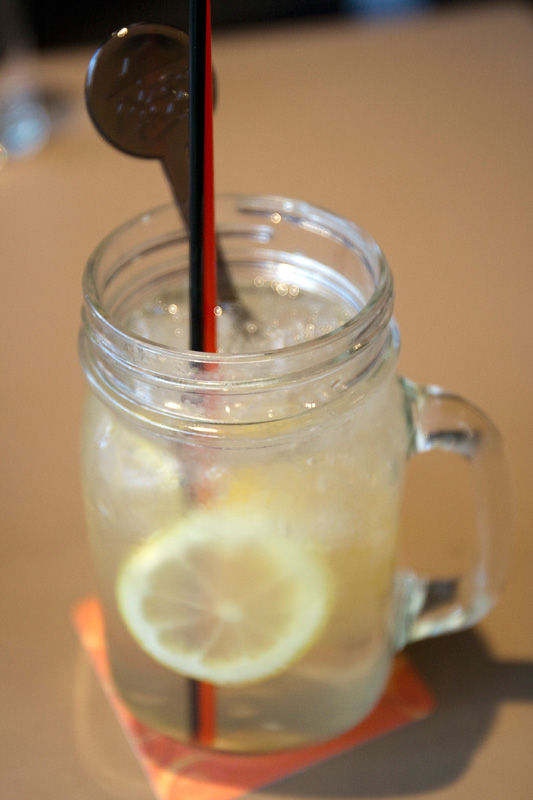
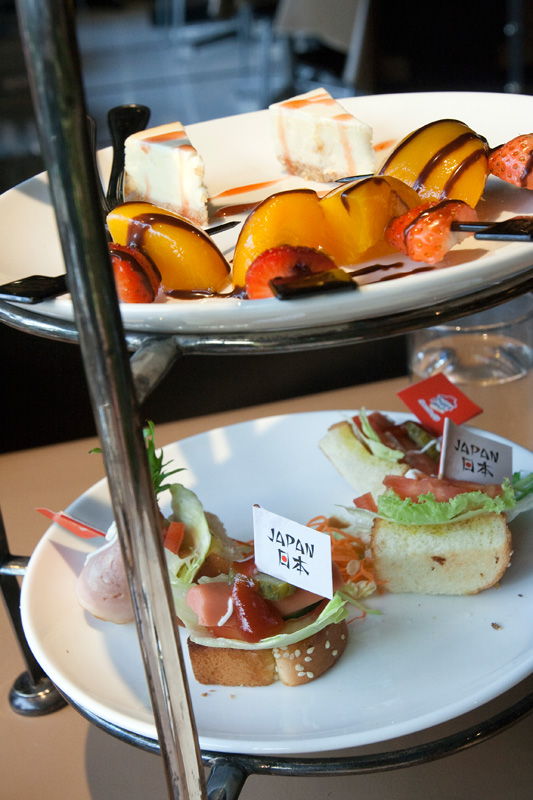

There’s also a McDonald’s version of a coffee house, named McCafé, which competes with high-end coffee shops. They’re usually located inside McDonalds, and serve more expensive fare.
Sharing tables
It’s not uncommon to share tables with other people at a restaurant. If there isn’t enough space, it means the restaurant is very good. This was probably one of the hardest things to get used to. No private conversations, and since Chinese food can be rather messy, you really have to be careful.
Toothpicks at every table
Since it’s not considered impolite in Chinese culture to use a toothpick while sitting at the table after a meal (provided your hand is covering your mouth), there are toothpick dispensers on the tables in restaurants and in houses.
Also, instead of black pepper, which is not common for Chinese cooking, there are white pepper shakers.
Gas prices
I was in my uncle’s Jaguar, and we went to a gas station to fill up one time. I don’t know if the tank was empty, but the gas cost him $100 CAD. I asked him how much he drove to have to fill up, and he told me 300km, which put the price of gas at roughly 2–3 times what it is in Canada. It’s pretty much all stop and go in Hong Kong. It seemed like stretches of highway aren’t longer than 10km, and the speed limit is 80km/h.
Crosswalks
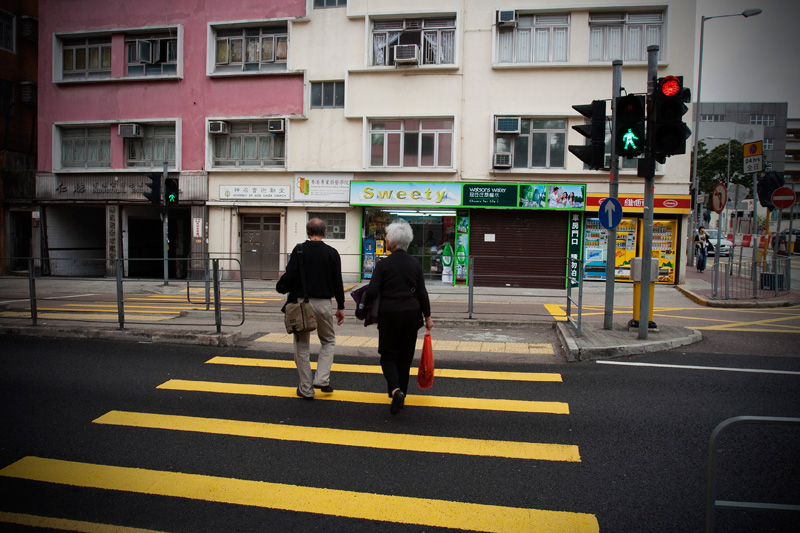
Crosswalks are divided in two parts of the street, with a walk signal that often only gets you half way to the middle of the street, cause it’s mounted to the median. There’s usually a “don’t walk” signal for the other half. This is because traffic is commonly allowed to flow in one direction but not the other, even though it’s coming from the opposite side, and not perpendicular.
There’s also a generous median in the middle; since Hong Kong is so populous, it lets a lot more people stand in the middle and wait. You’ll notice in the picture that you can’t run straight across the street, because the railings of the median go for a bit of a jog to one side first.
Taxis
Taxis are everywhere in Hong Kong. The fares seem to be about the same, which is strange, considering how much more expensive gas is over there. The drivers can hit a switch to open the back passenger doors automatically. Very useful when your hands are full.
Parks

There seems to be a lot of funding that goes into parks and recreational areas. That means there are always tons of workers who look after the parks, whether it’s trimming shrubbery, sweeping floors, picking up litter, cleaning the bathrooms, watering plants, and the like.

The trees and flowers are also often labeled with little yellow plaques that have the Chinese and Latin names.
No stars in the sky
I didn’t notice any stars while I was in Hong Kong. Which I was not surprised about, as it’s so urbanized. Light pollution is just one of the many pollutions that seem to affect such a populous city.
Subway system
The subway has stores that line the halls. Not just convenience stores, but travel agencies, bakeries, tea shops, and Chinese medicine shops. You can see them near the beginning of my Hong Kong: Markets video.
The voice that announces the stops is pre-recorded in Cantonese, Mandarin, and English (with a British accent). This is different from the Toronto subway system, where the train driver announces each stop in English only, with a garbled voice. The maps on subway cars also have blinking LEDs that let you know where you are. It’s a super easy system to use.
Sometimes, the distance to get from one subway car to another is pretty big, even though it’s at the same station, so there are not only escalators, but moving walkways to get between them faster.
1st floor vs ground floor
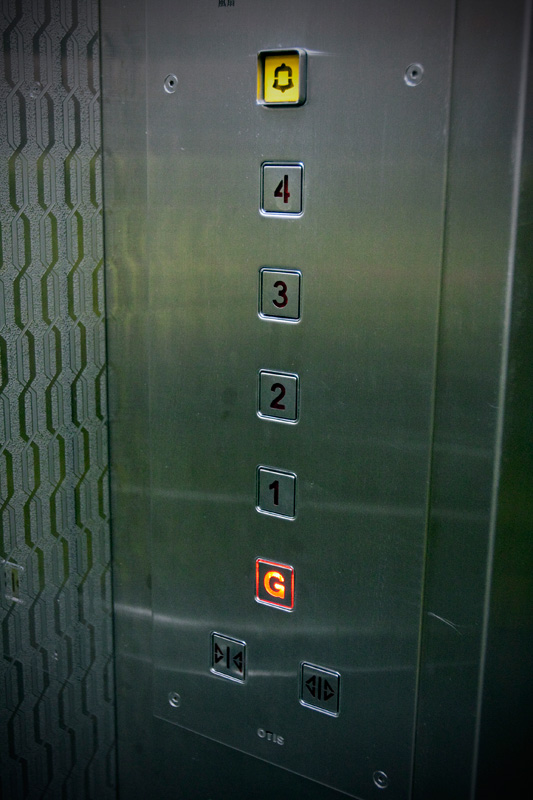
In Chinese, the ground floor is different from the 1st floor, and the 1st floor is really the second floor. This is really confusing, because when a sign is translated to English, the first floor is the ground floor. So even though you have one sign with both Chinese and English on it explaining what’s on each floor, the Chinese will say “1st floor” and directly across the translation will be “2nd floor”.
The electrical outlets is the one thing I’m very particular because I need my gadgets to work and Malaysian and Australian electrical outlets are completely different. I have to rely on my universal adapters to plug my stuff in. Strangely enough, Malaysiam 3 plug connectors (which look like one of the connectors in your picture) can have a variety of international plugs connected to it. Also, Malaysian plugs and Hong Kong plugs are the same (I think it’s the British colonial thing).
Most of the things here, strangely enough reminds me of Malaysia. I so get the elevator bit because I was always confused when first floor in Australia is referred to as the 2nd.
I have no idea how the charging bars work for my electronic devices. I believe they automatically change voltages, depending on the current they receive, because the adapters weren’t for changing voltage but only prongs.
If you suspect that plugs are the same across old British colonies, I wonder what the plugs in China are like. I would think they are the same, since it’s so close to Hong Kong.
You won’t believe this. The socket outlets in China vary from province to province, and from city to city. In some hotels, they provide different types in the same hotel. Talk about freedom of choice in authoritarian China :). It’s a paradox of Franco unruliness in collectivist China.
That’s unbelievable. You’d think that such a gigantic country, with a writing system that has been changed to “simplified”, would also be able to standardize an electrical system.
Perhaps all these different types are to help keep the manufacturing industry going!
thay wouldent put cool stuff like that in our parks man cuz there all too into the mighty dollar .
why let ppl get healty on there own when u can charge em 39.95 a month 4 the feeling of health
I really don’t know any funding details for parks in Canada, but it’s definitely not as great as what they have in Hong Kong. You have to remember that labour is much cheaper there too. There were also many senior citizens working at jobs just for something to do, and they don’t mind low wages.
I had no idea the gas was that bad!!! I’m going to have to repay my friends more when I go back.
I think the small water-heater solution is brilliant and I wish it were common here; you could regulate how hot and how much you want to spend instead of being of the mercy of your building manager.
What I most found different when I went there was the total glut of styles of interesting shoes and clothes that we simply didn’t have in the United States — at all!. It brought to my attention the fact that the major department stores in the U.S. have a quiet grip on what is provided to us in the malls. And MAN are their tastes boring compared to Asia, where all colors and shapes and styles are fair game for fashion.
I hear small water-heaters are common in Europe too. The technician who cleans my furnace recommended it as a replacement for my big water tank when it broke, but when I called the company, they said it was a special order. You need to design a house a little differently too with the small ones.
About the varying styles, I live in a small city, and my hair stylist tells me about training courses he goes to in LA, and the crazy hairstyles people are willing to wear. I guess style is all relative.
It’s more the clothes than hairstyles. (The hairstyles youre stylist is talking about end up on a very small number of people, comparatively. The rest are all dyed blonde straight shags. Pretty ho hum actually.)
Along with the bland hair, 1/3 of the LA population also drive black cars (forbid vans, and pick-ups), wear oversized shades, and carry around Louis Vutton producs. And the men can be just as bad.
You’re right about the split-type A/C, the compressor is on the other side of the external wall, so that you won’t have to bear with the noise. Same as the central A/C in Canada, where the compressor is installed in the front yard or back yard.
The single-whip is actually the logo of the Department of leisure & Recreation.
The railing of the safety island in the middle is exactly for the purpose of preventing people from running straight across the street.
I’m told that the Toronto government is now offering rebates for consumers to switch from storage type water heaters to instantaneous gas water heaters, to save energy (and money of course). Look it up.
A lot of public systems in HK may seem quite “advanced” and convenient. That’s only because there’s an extremely dense population (high usage), so that the system operators can afford the running cost.
And yes, a lot of the formats used in HK are British legacies.
Ah, the compressor being on the other side of the wall is why the A/C is so quiet! It was no louder than a fan. Actually, in Canada it’s even louder; I can hear my A/C through the outside walls.
I never realized that the jog of the railing is for people’s own safety. It’s another one of those small things where the Hong Kong does things automatically for the benefit of the people.
It’s amazing that the public transportation system has such a good margin. I’m guessing it’s because the area is small and stops are close together, making it extremely convenient. In Toronto and Ottawa, they’re always looking for public funding for an extra financial hand. I also noticed that there was almost no graffiti on the buses in Hong Kong, whereas in Ottawa it’s rare to see a bus without any markings, and the bus company announced that they won’t be cleaning them as often to save on costs. Maybe this is also because there are always people on the buses, so less chance of someone being alone for graffiti.
When I was in HK a few years ago, the tour guide told us that it was cheap to own a car in HK, but very expensive to maintain it. Parking is expensive, gas is expensive, everything is expensive.
And, don’t you think it is more logical to name the ground floor “GROUND”? LOL.
That’s exactly what my uncle told me too. And the fact that cars depreciate in value doesn’t help either.
And I always imagine that if an English-speaking person asks a Chinese person what floor something is on that there would be a great deal of confusion!